
Spend budget where demand is growing
If German demand is up 30% but UK is flat, shift your Google Ads, OTA promotions, and social campaigns accordingly. Without demand data, you spread budget evenly and waste money on flat markets.
Track which feeder markets are searching for your destination, when demand peaks, and how far ahead travelers book - built on 1.7 billion+ real accommodation searches.
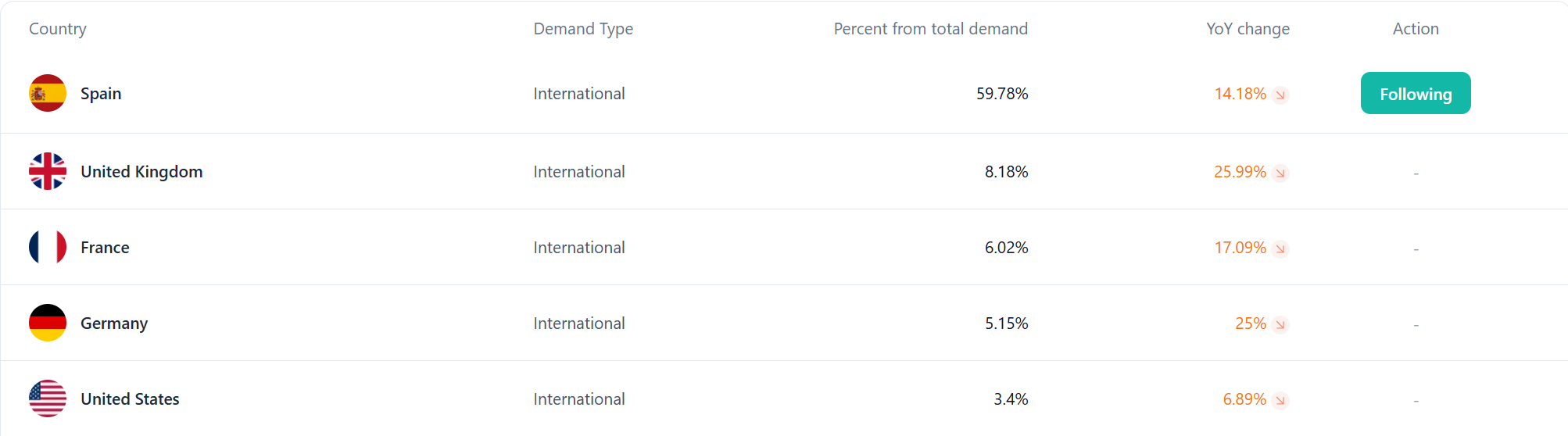
By the time you see bookings drop or surge in your PMS, the window to adjust has passed. Revenue managers rely on historical data and pace reports, but those tell you what happened, not what's coming.
Search data is the earliest signal of travel intent. When someone in Germany starts searching "beach hotels Cyprus October," that's a demand signal weeks before a booking. OTAs see these signals. Metasearch sees them. But nobody shows hotels the search intent that precedes bookings. That's the gap Tharro fills.
This isn't about looking at graphs. It's about making better decisions - faster - with data that arrives before your competitors have it.
If German demand is up 30% but UK is flat, shift your Google Ads, OTA promotions, and social campaigns accordingly. Without demand data, you spread budget evenly and waste money on flat markets.
When demand from high-value markets is surging, raise rates before bookings arrive. When it's declining, shift to volume strategies. Demand data gives you confidence to act early.
Booking window data shows when each market starts searching. German travelers book 8 weeks out, UK books 4 weeks. Launch Germany first. Timing to the planning window dramatically improves conversion.
German demand spiking? Make sure your HRS and German-language Booking.com presence is optimized - not just your English listing. Demand data tells you which market-specific channels to prioritize.
A new feeder market starts searching - maybe Poland or the Middle East. You see it weeks before booking data shows it. Enough time to create targeted offers and capture the demand first.
Present "demand from top 3 markets is up 18% for Q3 - here's our plan" instead of explaining last quarter's results. Forward-looking data builds board confidence and gets budget approved.
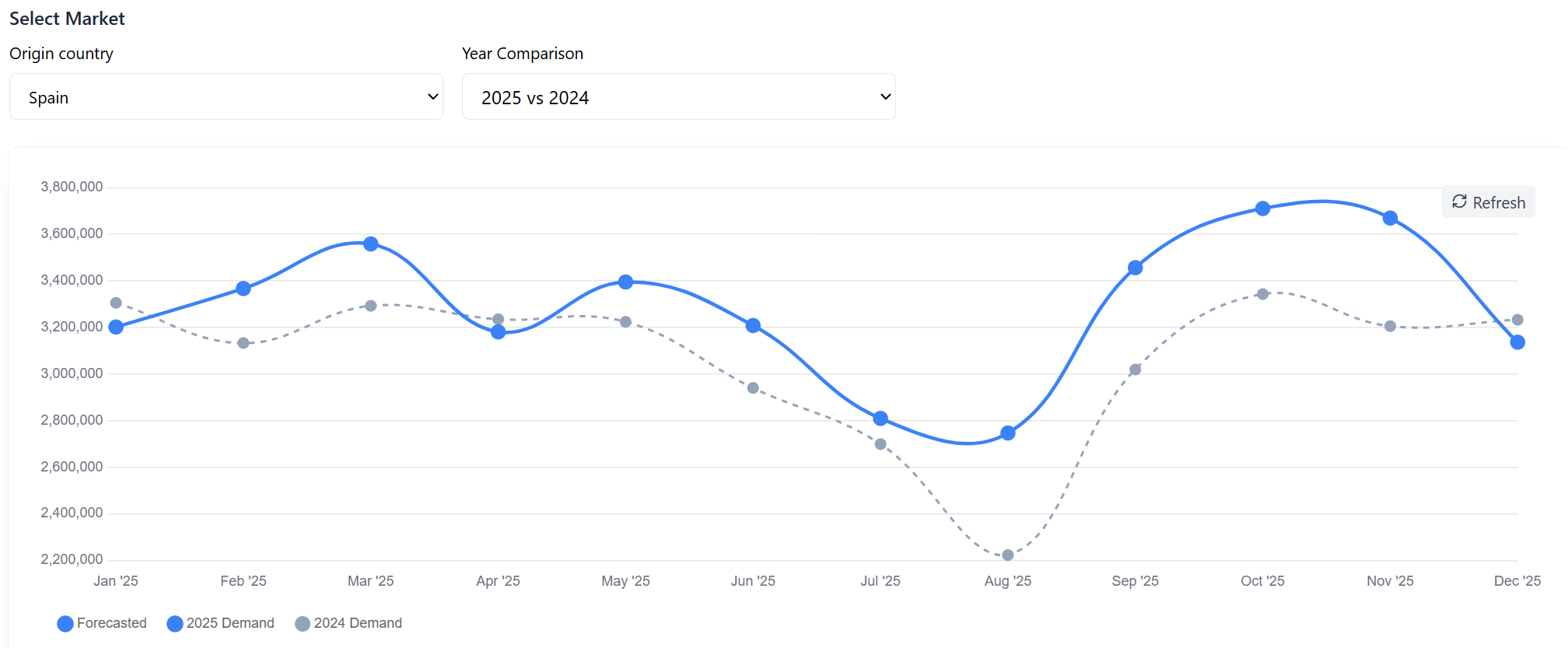
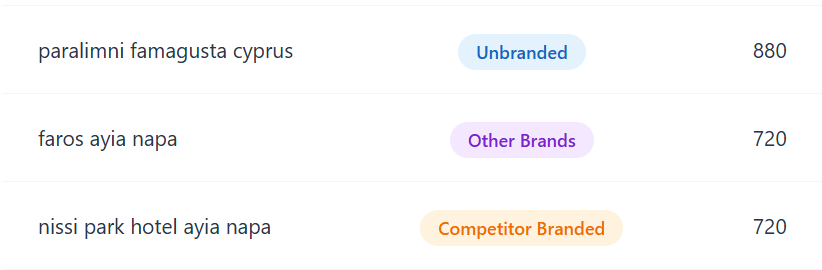
Not surveys. Not modeled estimates. Real traveler search behavior aggregated by source country, destination, and time period at a scale that gives reliable signals.
01

Allocate campaign budget based on real demand signals per feeder market. Measure campaign impact through demand shifts - months before arrival statistics arrive.
02

See demand formation 2-4 months ahead. Adjust rates and distribution proactively, while there's still time to capture - not after pace reports tell you what you missed.
03

Understand which markets are driving future bookings and whether your hotel is positioned to capture them. Forward-looking data for board presentations and strategy discussions.
See which markets are trending up and shift your spend before competitors catch on.
1.7B+ real accommodation searches aggregated by source country, destination, and time period. Not surveys, not modeled estimates — real traveler intent data.
Typically 2-4 months forward. Some markets with longer booking windows give even earlier visibility. Best combined with your own pace reports.
Both. Total destination demand by feeder market, and your hotel's share of visibility within that demand. Distinguish "demand is weak" from "demand is strong but we're not capturing it."
Lighthouse uses flight and hotel search signals for revenue management — excellent for that purpose. Tharro connects demand to your visibility across Google and AI, competitive benchmarks, and reputation. They're complementary: Lighthouse tells you demand exists, Tharro tells you whether you're positioned to capture it.
Yes. Destination-level benchmarks show how demand compares to competitors and which feeder markets are shifting between destinations.
Monthly for standard reporting, with quarterly demand forecast reports for key markets. Custom cadences available for Enterprise and DMO clients.
Demand = how many travelers are searching for your destination. Visibility = whether your hotel appears when they search. High demand + low visibility = missed bookings. Tharro tracks both.
Hotel demand intelligence uses forward-looking data - primarily search behavior - to anticipate future travel demand before it materializes as bookings. Unlike traditional forecasting based on historical data and pace reports, demand intelligence uses pre-booking signals to give hotels an earlier, more actionable view.
The core data: when a traveler in a specific country searches for hotels in a specific destination, that's a demand signal. Aggregated across millions of searches, these signals reveal growing feeder markets, peak timing, booking windows, and competitive destination shifts.
What feeder market data tells you
Which markets grow: German demand for Cyprus up 25% YoY? Increase German-language marketing and optimize HRS listings.
Which markets decline: UK demand down 15%? Redirect budget to growing markets instead of increasing UK spend.
Peak timing: Different countries have different holiday patterns. Germans peak Jul-Aug, Scandinavians Jun and Oct. Time campaigns to each.
Booking windows: Some markets book 2-3 months ahead, others 2-3 weeks. Match campaign timing to each market's planning cycle.
Budget allocation: Shift spend toward growing feeder markets based on real data, not last year's arrivals.
Pricing: Raise rates when demand is forming, not after rooms sell. Lower when signals are weak.
Campaign timing: Activate each market when travelers are in planning mode - not too early, not too late.
Distribution: Optimize market-specific channels (HRS for Germany, local OTAs for Nordics) based on where demand is growing.
Demand tells you which markets are searching. Google visibility tells you who they find.
Learn moreAs demand grows, AI starts recommending hotels. Track whether your property appears.
Learn moreDemand shifts trigger weekly actions: reallocate budget, adjust rates, and launch campaigns.
Learn more