AI
How to Get Your Hotel Recommended by ChatGPT: The Data
What actually makes ChatGPT recommend a hotel? Data from 720+ AI answer captures, plus the 7 moves that work, and the mistake most hotels make first.

Ask ChatGPT for "the best beachfront hotels in Paphos" and you get five names, a short pitch for each, and — increasingly — a clickable link. There is no page two. No ad slot to buy. Either your hotel is in the answer or a competitor is.
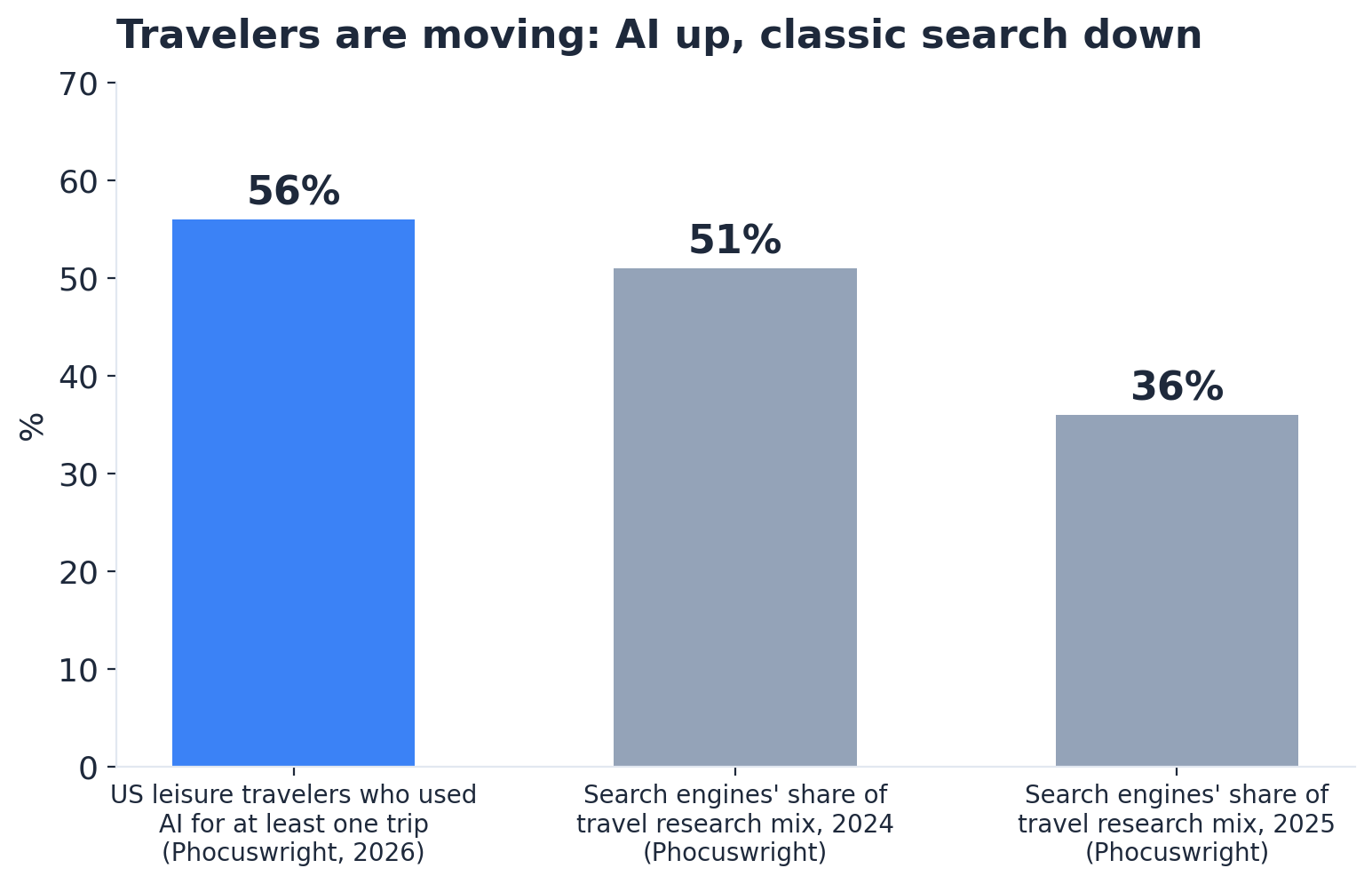
This used to be a curiosity. It isn't anymore. Phocuswright's 2026 research found that 56% of US leisure travelers have now used AI for at least one trip, while search engines' share of the travel research mix dropped from 51% to 36% in a single year. Allianz's 2026 Travel Confidence Index puts AI trip-planning use at 37% of American travelers. And the traffic is following the behavior: Adobe measured AI-driven visits to US travel sites up 194% year over year in May 2026 — over 2,200% since late 2024.
So the question hoteliers keep asking us — how do I get ChatGPT to recommend my hotel? — is the right question. The honest answer is more interesting than the LinkedIn version, because we've measured it.
First, understand what ChatGPT actually is: a reputation engine
When we analyzed how different AI engines assemble hotel recommendations across markets, one pattern held everywhere: ChatGPT builds its answers from reputation sources — Tripadvisor, Reddit threads, editorial "best of" lists, travel guides. Google's AI Mode behaves completely differently: it leans on transactional sources — OTAs, tour operators, metasearch.
Same question, opposite machinery. This matters because most advice online treats "AI optimization" as one thing. It isn't. What gets you into ChatGPT (reviews, community mentions, editorial coverage) is largely earnable through marketing and PR work. What gets you into Google's AI Mode is structural and runs through feeds and listings. If you optimize for the wrong engine, you'll do real work for zero visible result. (We cover the full engine-by-engine playbook in our guide to generative engine optimization for hotels.)
And the engines genuinely don't agree with each other. In our cross-engine comparisons, the overlap between two engines' recommendations for the same market ranged from 0.18 to 0.42 (where 1.0 means identical answers) — and in some markets, two engines' top-10 lists shared zero hotels. Being visible in one AI assistant tells you nothing about the others.
Second, understand the trap: being mentioned is not being booked
Here's the finding that should reframe your whole approach. In our Berlin market sample, when AI answers included a hotel, the hotel's own website carried a clickable booking link in just 13% of cases. Expedia listings for the same hotels? 89%.
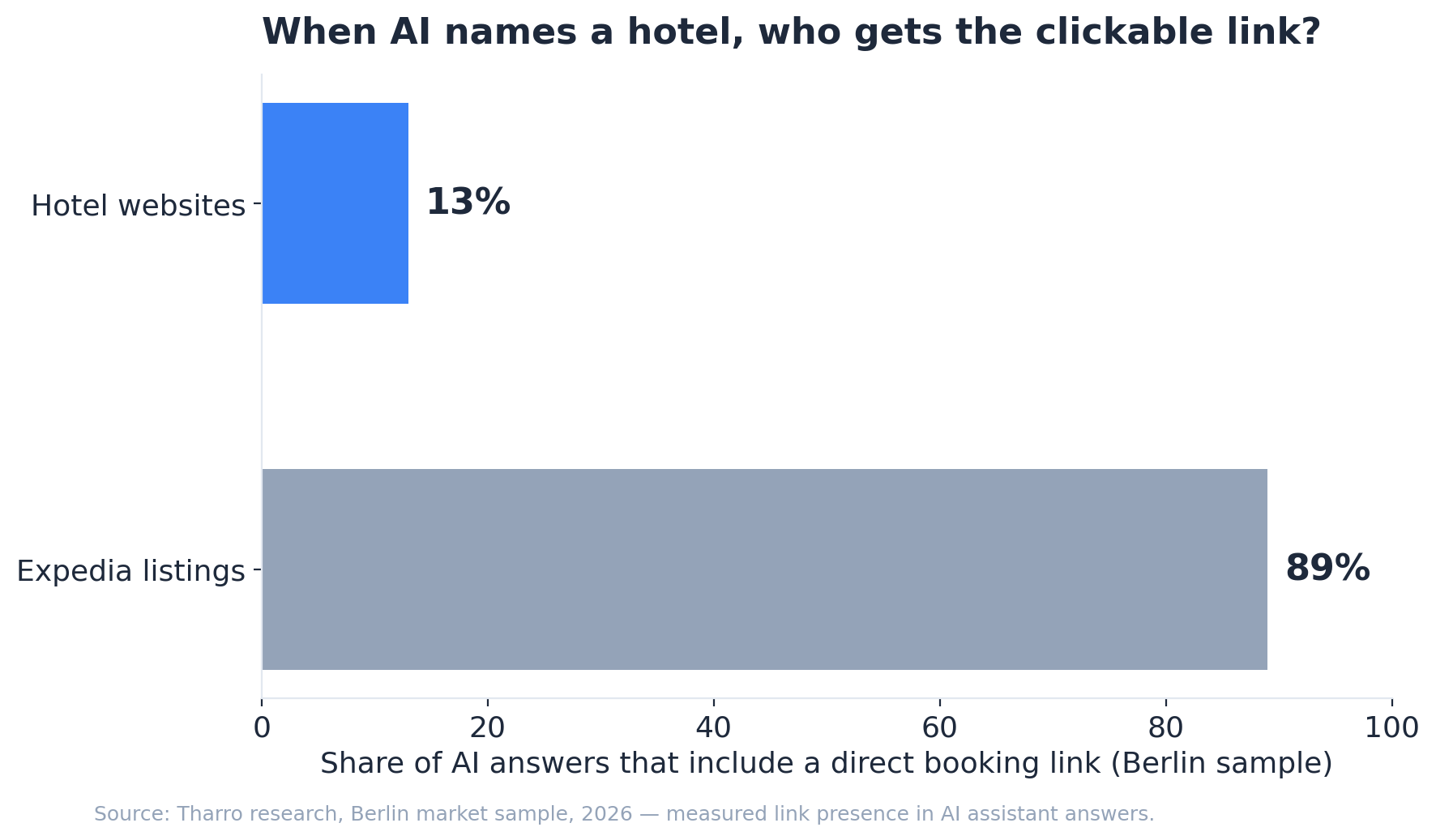
We call this the OTA Paradox: AI can be recommending your hotel all day while routing the actual booking through an OTA — which means you pay 15–25% commission on a guest that an AI sent "to you." Getting mentioned is step one. Getting linked directly is where the revenue is. The good news from the industry side: Lighthouse data across an 80,000-hotel network shows AI referral traffic to hotel websites jumped more than 50% within weeks of ChatGPT expanding outbound links in its answers — the direct pipe exists now, and it's growing.
Why you can't just "SEO harder"
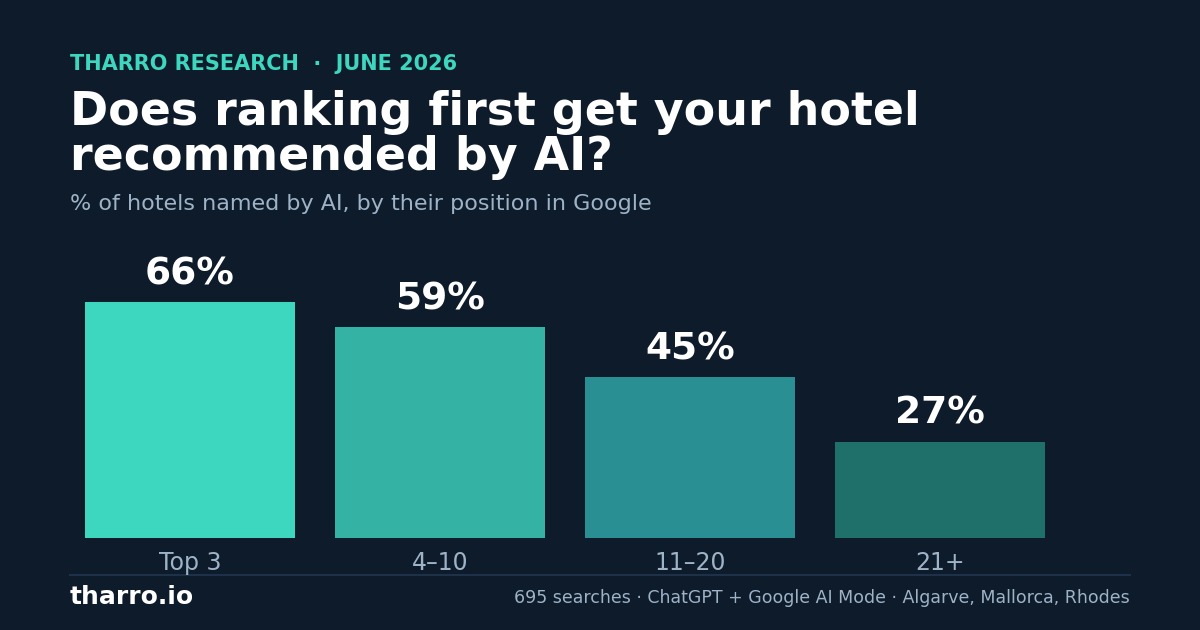
Our research across three independent studies converges on an uncomfortable number: hotels control roughly 7% of the sources AI relies on when talking about them. The other ~93% is OTA listings, review platforms, forums, blogs, and editorial coverage. We also verified that ranking well on Google doesn't fix this: even for hotels sitting in Google's top 3 for their target queries, the hotel's own site was cited by AI less than 20% of the time.
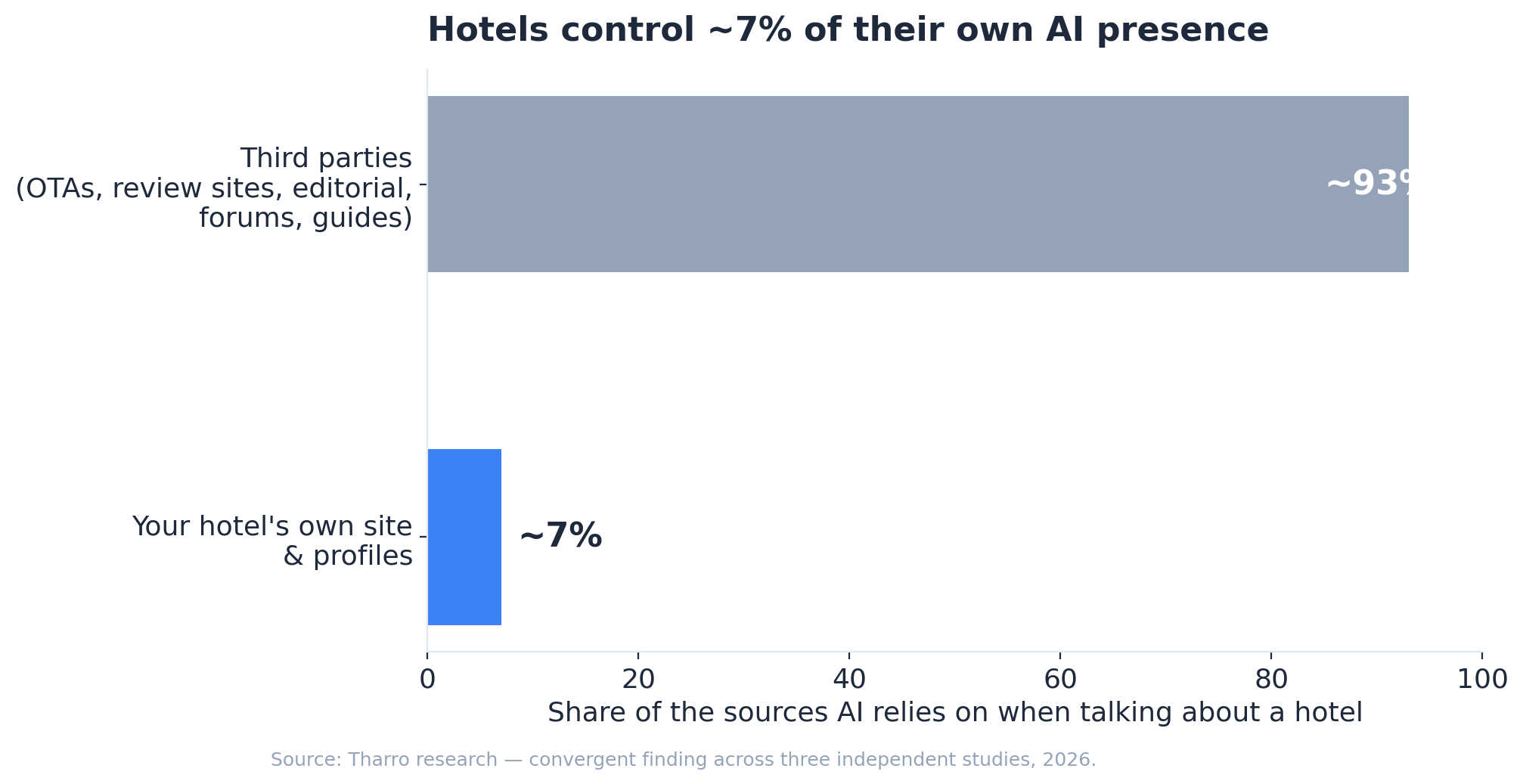
Translation: you cannot fully rank, brand, or review your way into AI answers. What you can do is maximize the inputs AI demonstrably uses, fix the direct-link leak, and monitor which engines are moving — because they move independently.
The playbook: 7 moves, in order of evidence
1. Complete your Google Business Profile — everything. Name, category, amenities, photos, hours, booking link. This is the single highest-leverage action for Google's AI surfaces, where the majority of hotel links resolve to GBP listings, and it feeds every other engine's understanding of basic facts about you.
2. Make recent reviews your KPI, not lifetime score. AI engines weight review sentiment heavily, and recency matters: a hotel with 50 detailed reviews from the last three months reads as more alive than one with 500 from five years ago. Ask at checkout, respond to everything, and push volume on the platforms ChatGPT actually reads — Tripadvisor first.
3. Publish content only you can write. When your website is thin, AI describes you using your Booking.com listing — meaning an OTA controls your story. Area guides, "best for" pages (couples, families, spa weekenders), seasonal content, dining detail. Give the machines your version.
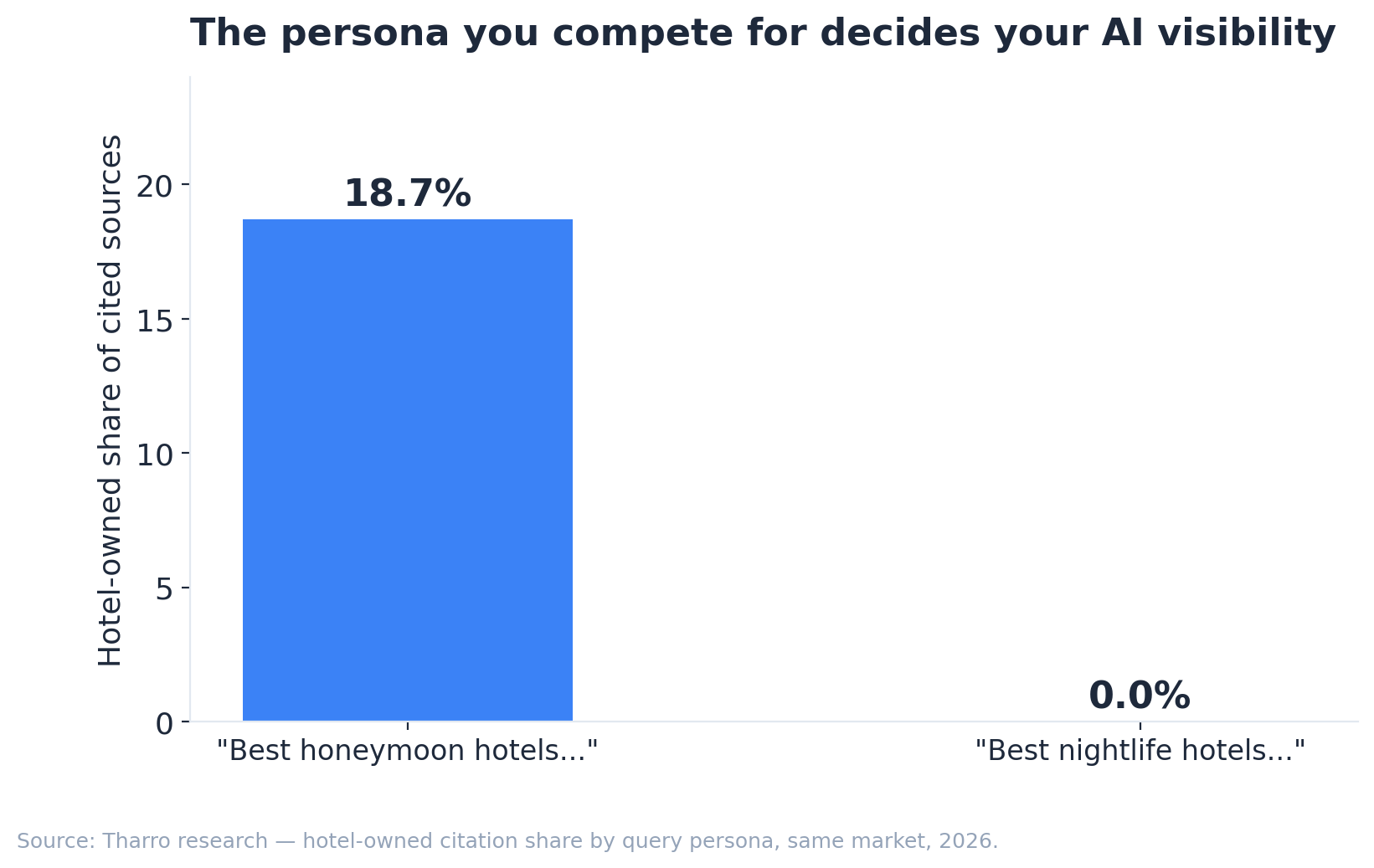
4. Pick your persona battles deliberately. In our persona analysis, hotel-owned sources earned 18.7% of citations for honeymoon-type queries — and 0.0% for nightlife queries in the same market. The theme you compete for largely determines whether you can win. Match your content and review-generation to personas where hotel sources actually get cited.
5. Implement Hotel schema markup. Structured data lets AI parse your rooms, amenities, location, and rates accurately instead of guessing from third-party scrapes. It's a one-time technical task your web team can do in a day.
6. Earn third-party mentions. Since ~93% of your AI presence lives on sites you don't own, the highest-ceiling work is getting into the sources AI trusts: local travel blogs, destination guides, media round-ups, community threads. One genuine editorial mention beats ten pages of your own copy.
7. Monitor — because a single query proves nothing. AI answers change by model, phrasing, language, and week. One test in ChatGPT is an anecdote. A reliable picture takes hundreds of queries across personas, platforms, and markets, tracked over time — which is exactly what Tharro's AI Visibility tracking automates, benchmarked against your comp set.
Set expectations like an operator, not an optimist
Two honest caveats. First, AI referral traffic today is still small — Lighthouse pegs it at just under 1% of total hotel website visits. This is an early-mover channel, not a replacement for your Google strategy; the two feed each other (AI pulls heavily from what ranks — see our work on Google visibility and SERP ownership). Second, nobody dominates this space yet: in our Cyprus AI Visibility Study of 720 AI answer captures, the market's most-recommended hotel held just 2.1% share of voice, and 62% of hotels were named exactly once. That's not a warning — it's the opportunity. The leaderboard is still unwritten, and the hotels doing this work now are writing it.
Want to see how ChatGPT, Gemini, and Google AI actually talk about your hotel — and who gets the booking link? Start a free Tharro trial and get your AI visibility score in minutes.